




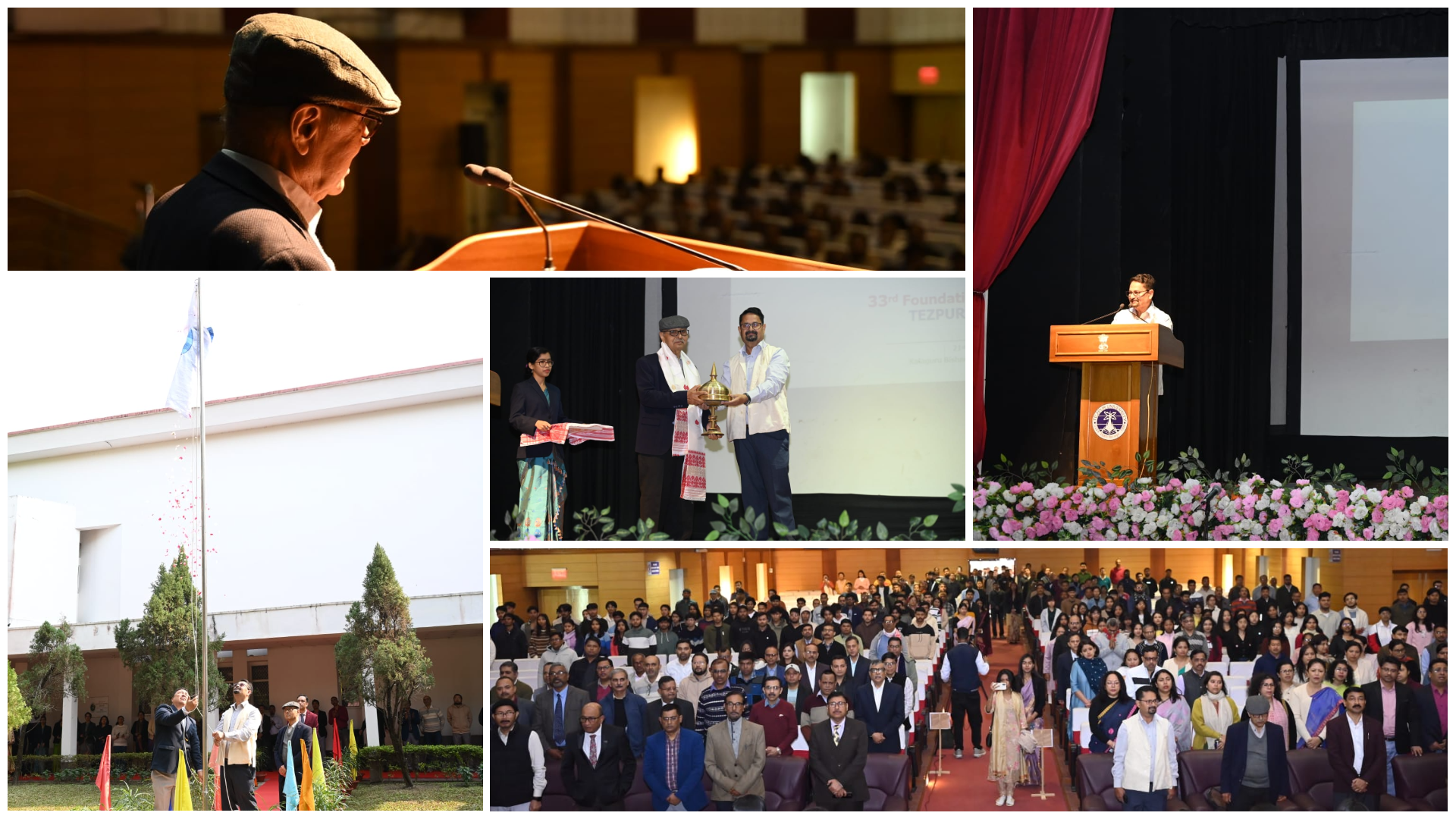
Tezpur, January 21, 2026 (Wednesday): Tezpur University (TU) celebrated its 33rd Foundation Day with a ceremonial programme at the KBR Auditorium, where eminent scientist Dr Dinesh Chandra Goswami delivered a powerful oration urging the academic community to champion free thinking and scientific temperament.
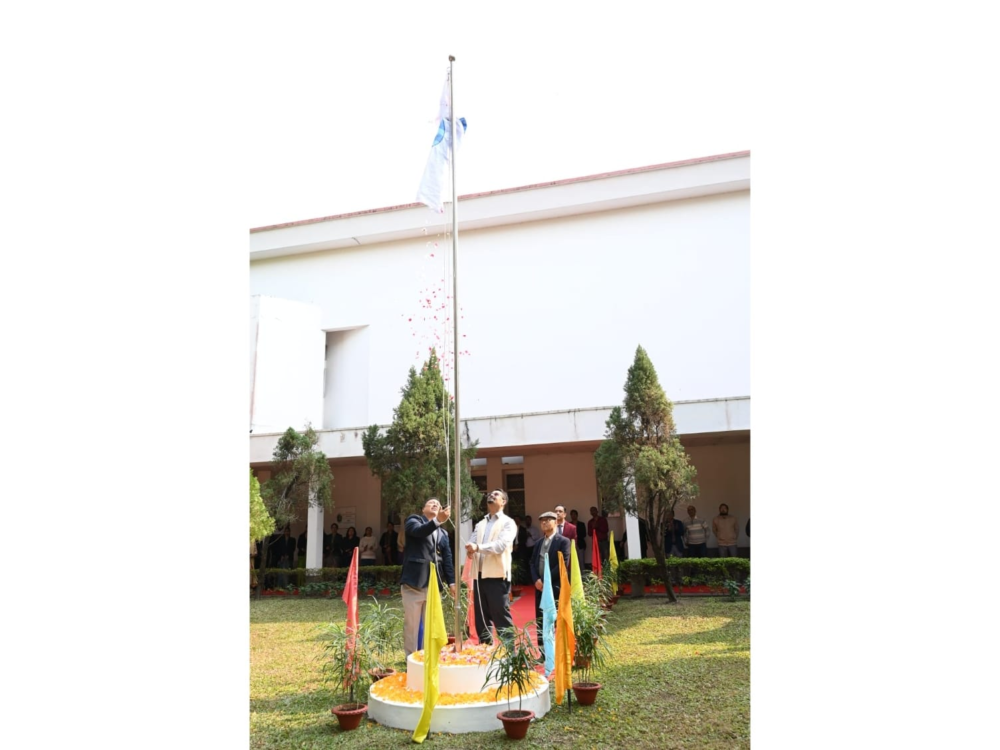
The event commenced with the hoisting of the university flag by Prof. Amarendra Kumar Das, Acting Vice-Chancellor of TU. In his welcome address, he called upon all stakeholders to work collectively towards strengthening the institution’s ecosystem. Prof. Das emphasised the need for a renewed focus on innovation and measurable outcomes, including start-ups and economic value generation. He also stressed the importance of transparency, fairness, punctuality and dialogue, urging the campus community to become active partners in TU’s development.
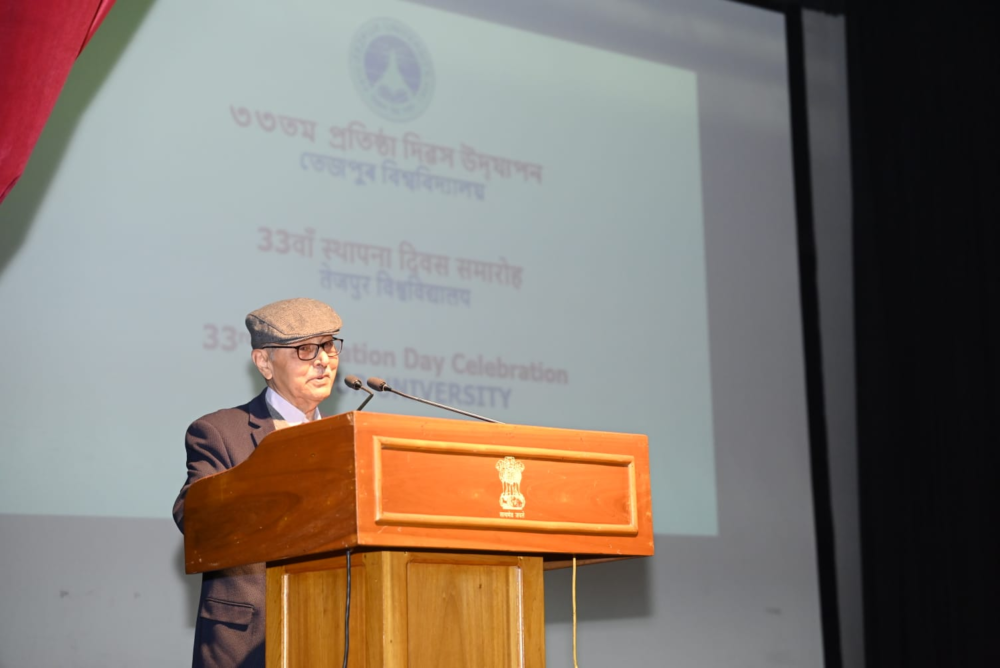
Dr Goswami, a noted author and popular science communicator, chose “Free Thinking and Scientific Temperament” as the theme for his Foundation Day Oration. He argued that universities must remain spaces of free thinking, guided by reason and grounded in knowledge. The scientist observed that free thinking requires a foundation of learning, and that knowledge must ultimately evolve into wisdom, encompassing context, judgement and the ability to choose what is appropriate.
To illustrate the challenge of communicating new ideas, Dr Goswami recounted an anecdote involving Nobel laureate Niels Bohr and his younger brother Harald Bohr. When Niels enquired why audiences preferred Harald’s speeches, Harald replied that Niels always spoke of new things whilst he spoke of what people already knew. Dr Goswami used this observation to underline why universities must nevertheless persist with new thinking and discovery.

Referring to Galileo, Dr Goswami spoke of the courage and discipline needed for free inquiry. He remarked that meaningful research requires time to think, noting that even if many scholars reflect and only a few produce breakthrough ideas, the contribution of even one significant idea benefits society. On scientific temperament, Dr Goswami stressed the importance of evidence and testability. He explained that claims which cannot be verified should remain pending until evidence emerges. “A claim should be accepted or rejected only after logical thinking and evidence,” he said.
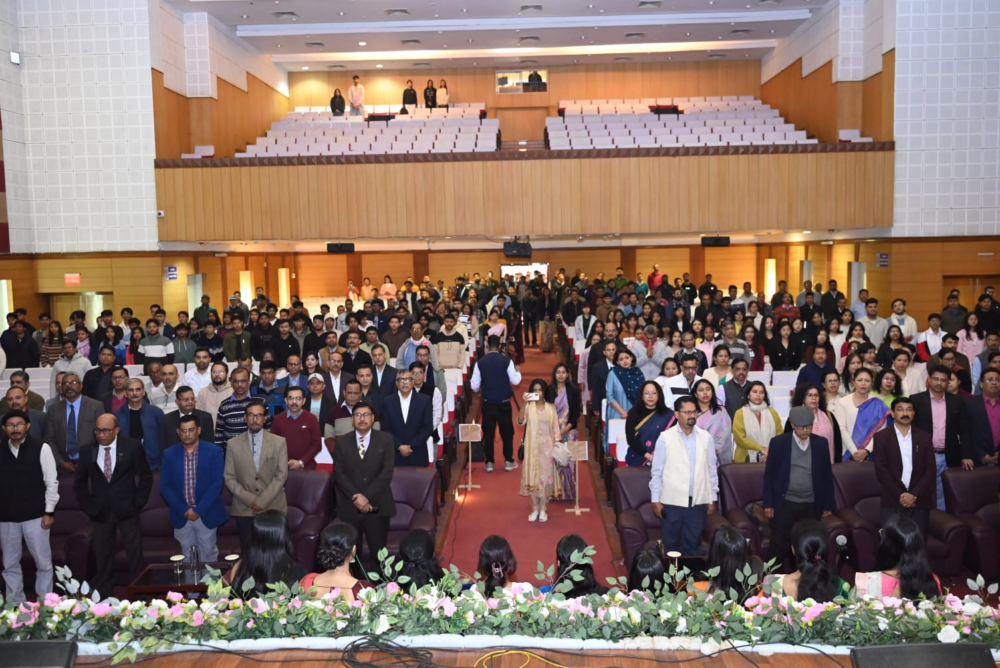
Offering recommendations to students, Dr Goswami urged them to choose their own path with conviction, remain tolerant, protect the environment through responsible everyday habits, respect the opposite sex, practise gratitude and reciprocity, and make thoughtful life choices. He concluded with a quote often attributed to Albert Einstein: “Only those who attempt the absurd can achieve the impossible,” encouraging students to strive for the seemingly impossible with focus and purpose.
The programme concluded with a cultural item and a formal vote of thanks offered by Prof. Vijay Kumar Nath, Chairperson of the Organising Committee.