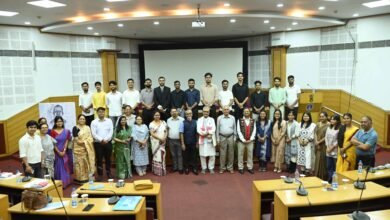





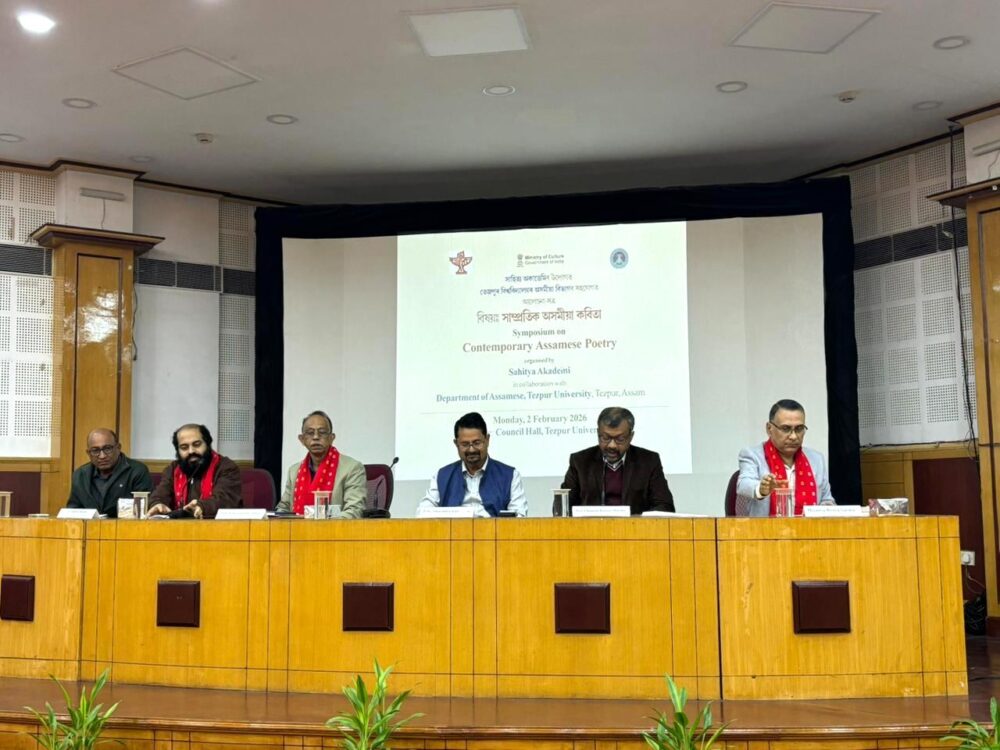
A one-day symposium on “Contemporary Assamese Poetry”, jointly organised by Sahitya Akademi and the Department of Assamese, Tezpur University, was held at the Council Hall, Tezpur University. The symposium brought together eminent scholars, poets, and academics to deliberate on the evolution, philosophy, and future of Assamese poetry within the larger Indian and global literary context.
Delivering his address, Diganta Biswa Sarma, Convener, Assamese Advisory Board, Sahitya Akademi, strongly critiqued what he termed neo-American criticism. He asserted that the Assamese literary tradition does not require external critical frameworks, pointing out that Assam had already witnessed the emergence of Neo-Vaishnavism in the 16th century, long before modern Western theories took shape. Sarma highlighted that humanism had been clearly defined in Hemkosh. Taking a critical dig at postmodernism, he remarked that nobody truly knows what postmodernism is, adding that the discourse has already moved to what is now being called post-postmodernism. He further noted that a colonial mindset has constrained indigenous knowledge systems.
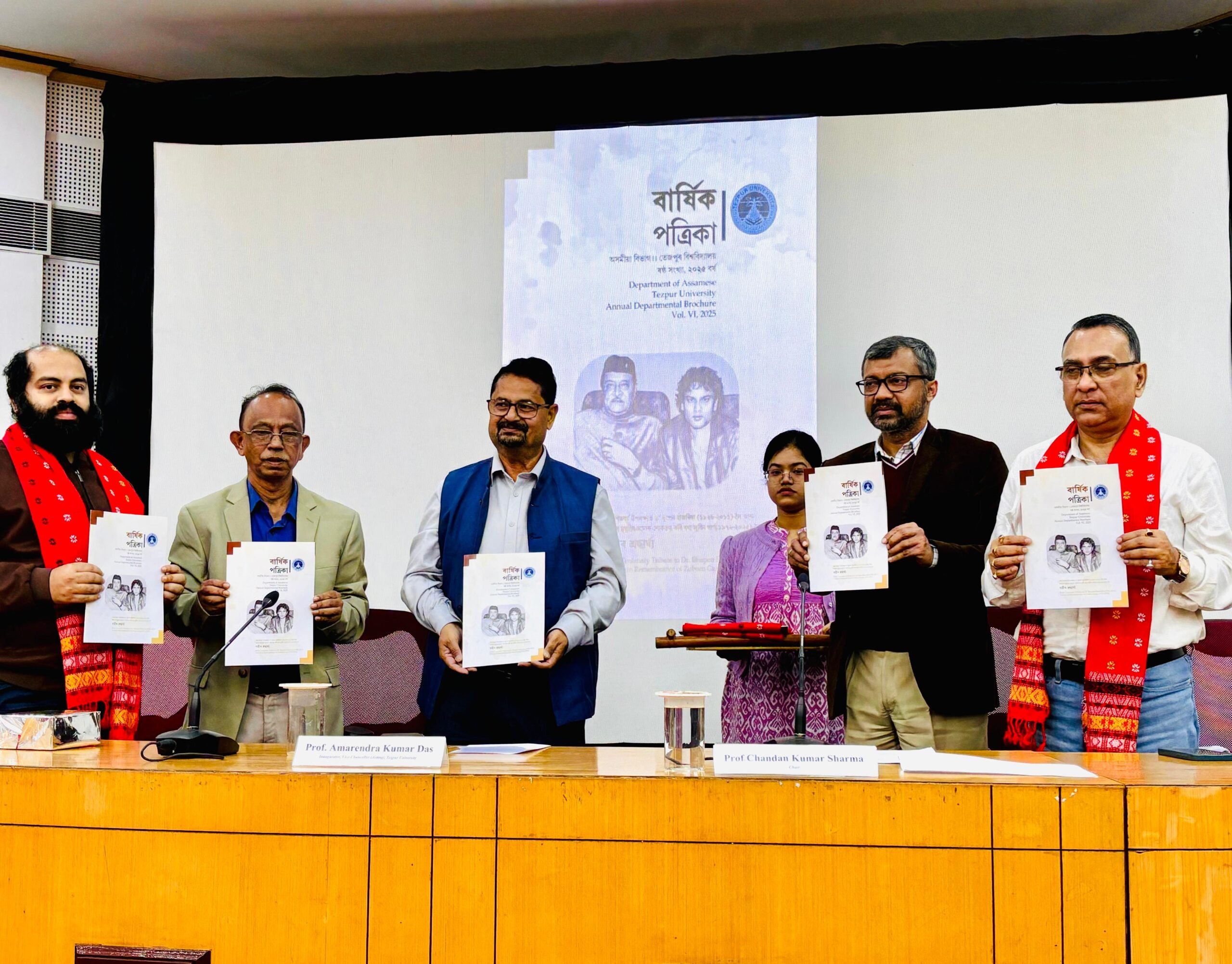
In his inaugural address, Prof. Amarendra Kumar Das, Vice-Chancellor (Acting), Tezpur University, emphasised that the functionality of a language is crucial for its survival. He observed that language must have practical and social usage to sustain its identity. Whilst stressing the importance of respecting all languages, he cautioned against imposing any language on others. He also remarked that literature cannot merely be “taught” in a mechanical sense, but must be experienced and lived.
The keynote address was delivered by Prof. M. Kamaluddin Ahmed, Department of Assamese, Gauhati University. He observed that European modernism and Indian modernism developed in parallel, and that Assamese modernism emerged simultaneously within this broader framework. Speaking on mysticism and modern poetry in Assam, he referred to Sri Aurobindo’s views on the future of Indian poetry, elaborating on the objectives of Indian poetic traditions. He discussed the nuanced relationship between words and meanings in poetry and noted that contemporary Assamese poetry strongly reflects the socio-political realities of Assam. He further observed that symbolism has largely been disregarded in contemporary Assamese poetry, marking a significant shift in poetic expression.
The inaugural session was chaired by Prof. Chandan Kumar Sharma, Dean, School of Humanities and Social Sciences, Tezpur University.

The symposium featured two technical sessions with paper presentations by noted poets and scholars. In the first session, papers were presented by Arnab Jan Deka, Mridul Haloi, and Pallabika Sharma, whilst the second session featured presentations by Arindam Sarma, Dilip Phookan, and Pranjit Das. The sessions witnessed engaging discussions on poetic form, thematic concerns, and contemporary literary trends.