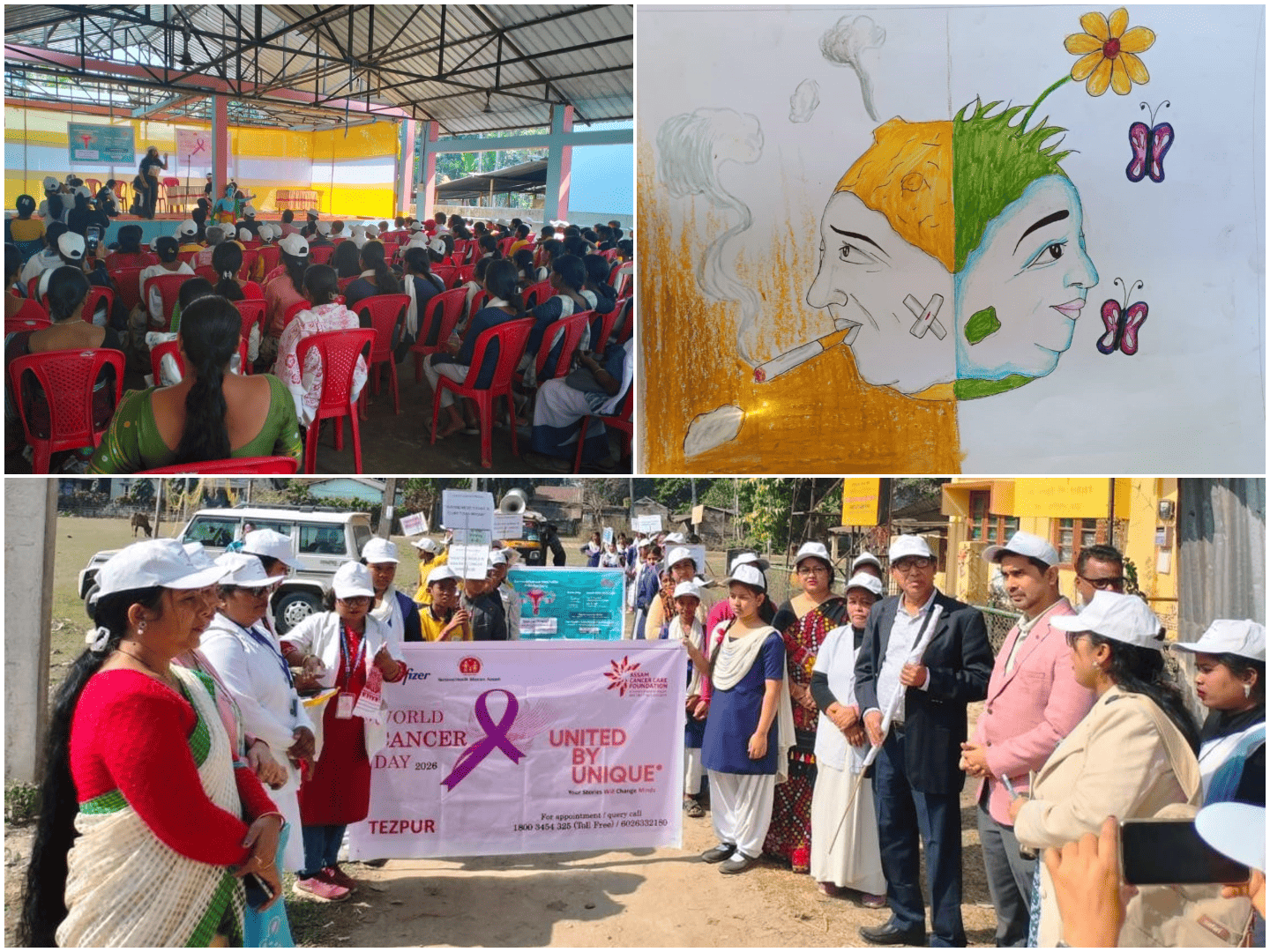
Tezpur, February 4, 2026 (Tuesday): In a robust display of community health activism, the Assam Cancer Care Foundation (ACCF), in strategic collaboration with the District NCD Cell, Sonitpur, observed World Cancer Day today. The event featured a series of high-impact activities aimed at raising awareness, promoting early detection, and advocating for a “Healthy Assam, Cancer-Free Assam.”
A Morning of Action: Walkathon and Yoga

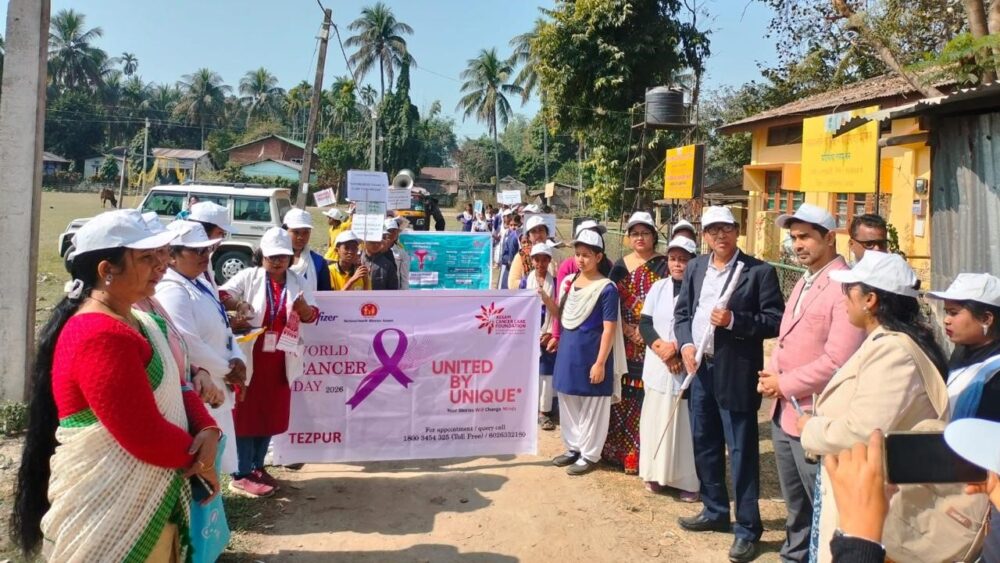
The day’s proceedings commenced with a spirited walkathon, drawing participation from healthcare professionals, students, and local citizens. The event was officially flagged off by Dr Tilak Bhattacharya, District Nodal Officer (DNO), IDSP. The walkathon served as a visual reminder of the importance of physical activity in prevention. Following the walk, participants engaged in a yoga session, emphasising the role of a holistic lifestyle and mental well-being in the fight against chronic diseases.
Nukkad Natak: Street Theatre for Awareness
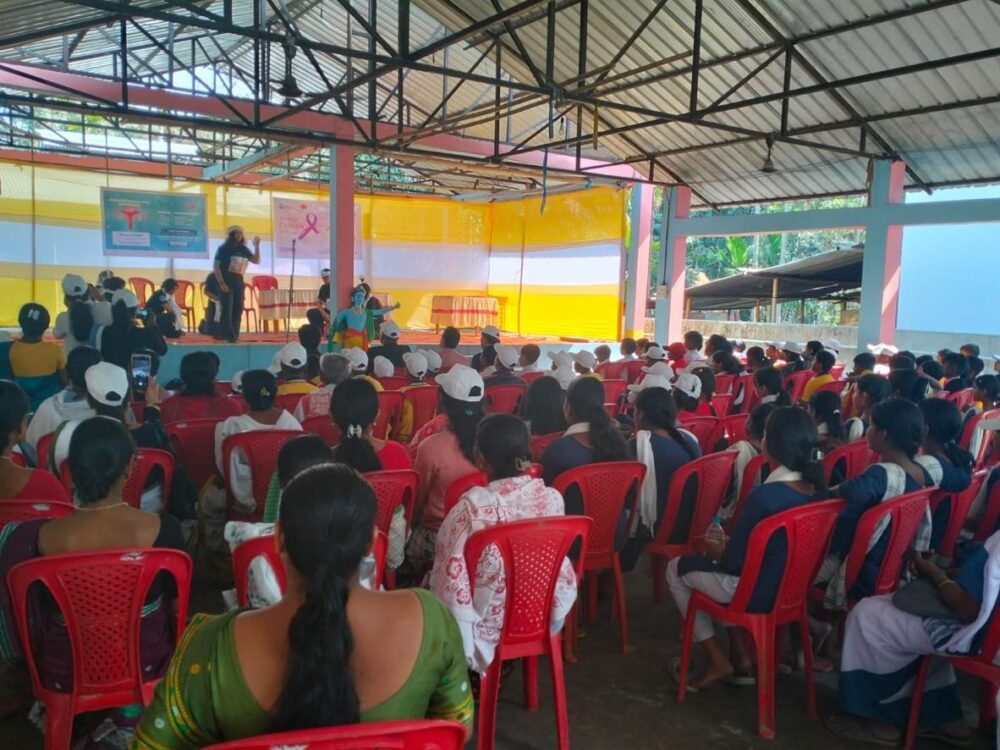
A street play was also organised by the students of Tezpur University, highlighting the myths and facts about cervical cancer, HPV vaccination, and its importance.

Clinical Insights: The Fight Against Cervical Cancer
Dr Sanjeev K Gupta, Senior Consultant & Head Clinical Oncology, Tezpur Cancer Centre, delivered a comprehensive presentation on cervical cancer. “Early screening and vaccination are our most potent tools. We must break the silence surrounding women’s health to ensure no one is left behind,” noted Dr Gupta.
Furthering this technical discussion, the Zonal Coordinator Ms Dipti Moni Das briefed the audience on the critical importance of screening and the global “90-70-90” elimination goal for cervical cancer: 90% of girls fully vaccinated with the HPV vaccine by age 15, 70% of women screened using a high-performance test by age 35 and again by 45, and 90% of women identified with cervical disease receiving treatment.
Leadership Voices and Strategic Objectives

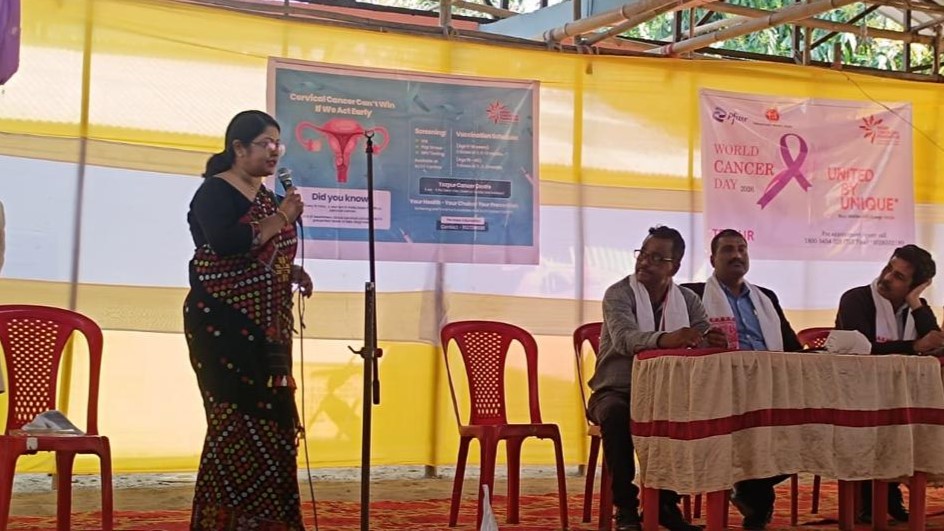
The event was graced by several key dignitaries who provided a roadmap for cancer control in the district. The Sub-Divisional Medical & Health Officer (SDM&HO), Bihaguri BPHC, outlined the core objectives of the day, emphasising a shift from reactive treatment to proactive prevention. The District Programme Coordinator (DPC), NCD Cell, Sonitpur, shared insights into common regional cancers, highlighting how daily habits—such as tobacco use and poor diet—play an active role in cancer incidence.
Creative Advocacy: Art for Awareness

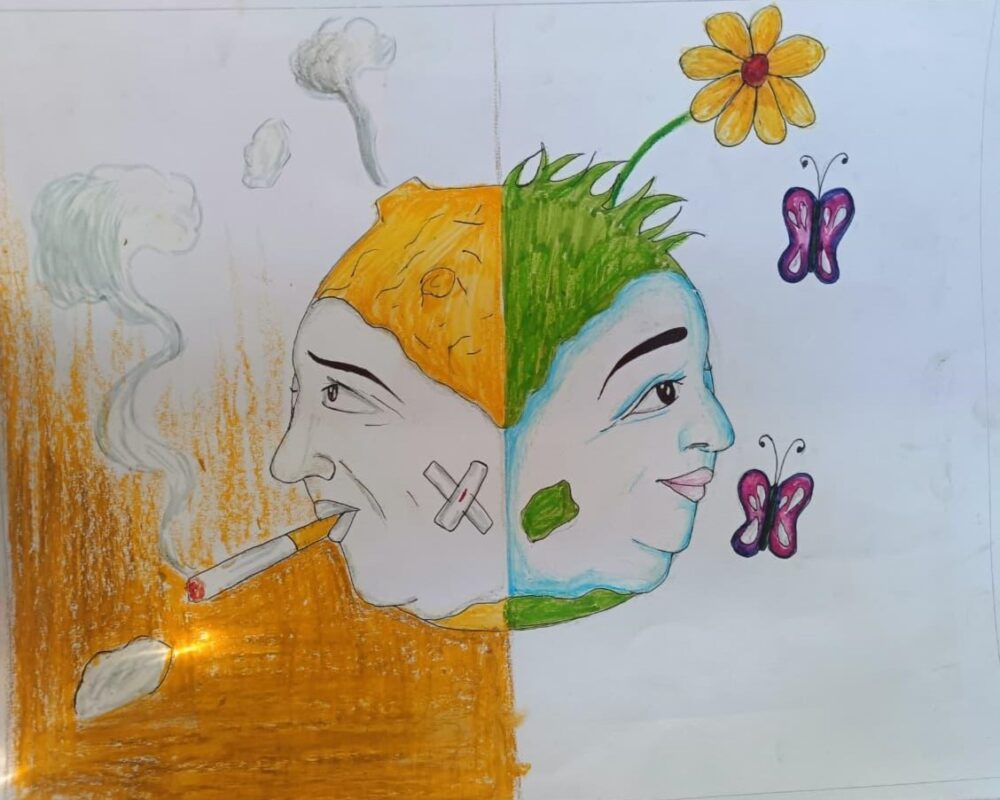
To engage the younger generation, an art competition was organised on the theme “Healthy Assam, Cancer-Free Assam.” Students depicted the impact of lifestyle choices on long-term health. The event concluded with a prize distribution ceremony to honour the artistic contributions that most effectively communicated the message of a cancer-free future.
Conclusion

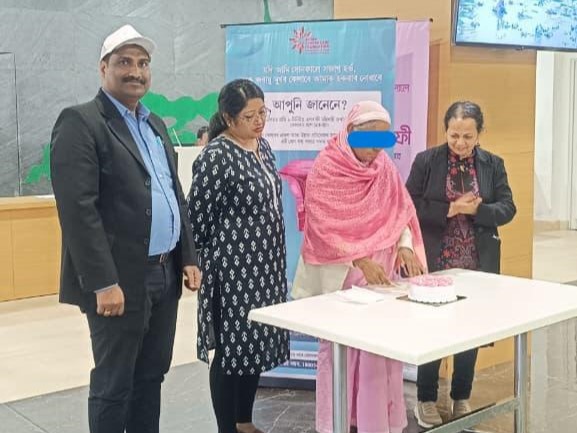
The collaborative effort between ACCF and the District NCD Cell successfully brought the global theme of World Cancer Day to the local level. By combining physical activity, clinical education, and creative expression, the organisers reinforced that a healthier Assam is possible through collective action and lifestyle modification. A small ceremony was also held at the hospital premises, where a cake-cutting ceremony was observed with a cervical cancer patient given the honour of cutting the cake.
WORLD CANCER DAY 2026: UNITED BY UNIQUE
What is World Cancer Day?
World Cancer Day is a global awareness initiative observed every year on 4 February to unite people, communities, and governments in the fight against cancer. Led by the Union for International Cancer Control (UICC), this important day focuses on raising cancer awareness, improving prevention strategies, encouraging early detection, and promoting equitable access to treatment worldwide.
World Cancer Day Theme 2025-2027
According to the Union for International Cancer Control, the World Cancer Day theme for 2025-2027 is “United by Unique”, recognising that every person’s cancer journey is distinctive, whilst people worldwide remain united by a common goal to reduce cancer’s burden. The 2026 theme specifically emphasises people-centred cancer care, placing individual needs, preferences, and lived experiences at the heart of cancer prevention, screening, diagnosis, and treatment.
Global and India’s Cancer Burden
Globally, cancer is responsible for nearly 10 million deaths annually, making it one of the leading causes of death worldwide. The most common cancers include breast, lung, colorectal, prostate, stomach, and liver cancers, many linked to modifiable risk factors such as tobacco use, alcohol consumption, obesity, and infections.
In India, data show a rising cancer burden, with breast, cervical, oral, and lung cancers being amongst the most common. Late presentation remains common, which significantly worsens outcomes. Health authorities stress that strengthening vaccination programmes (HPV, hepatitis B), tobacco control, population-level screening, and access to affordable treatment are critical for reducing India’s cancer burden.
Understanding Cancer: A Brief Overview
Cancer is not a single disease but a group of diseases in which abnormal cells grow uncontrollably, invade nearby tissues, and can spread to other parts of the body. These changes result from genetic mutations altering how cells grow, divide, and die, caused by lifestyle factors (tobacco, diet, physical inactivity), environmental exposures, infections, hormones, ageing, and inherited genetic changes.
Common warning signs may include unexplained weight loss, persistent lumps or swellings, changes in moles or skin lesions, abnormal bleeding or discharge, prolonged cough or hoarseness, difficulty swallowing, and changes in bowel or bladder habits.
However, early cancer often causes no symptoms, making cancer diagnosis tests and regular screenings crucial for finding precancerous changes or early-stage cancers when treatment is most effective.
Preventive Health Tests & Screenings for Cancer
Regular cancer diagnosis tests and evidence-based screening can detect cancer before symptoms appear or identify precancerous changes treatable early.
Essential cancer screening tests include:
- Mammogram: X-ray examination to detect tumours or calcifications
- Tumour/cancer marker profile test
- Pap smear (conventional method) or Pap smear by liquid-based cytology (LBC)
- Cervical screening profile
- Primary cervical cancer screening high-risk HPV detection
- PSA (Prostate-Specific Antigen) total serum test
- Cancer screen profile (male and female variants)
Key Cancer Prevention Strategies
Lifestyle Modifications:
- Maintaining a healthy weight through a balanced diet and regular exercise
- Avoiding tobacco products and limiting alcohol consumption
- Protecting skin from excessive sun exposure
- Following recommended vaccination schedules (e.g., HPV and hepatitis B)
Dietary Recommendations:
- Consuming plenty of fruits and vegetables
- Choosing whole grains over refined products
- Limiting processed and red meat consumption
- Staying adequately hydrated
Regular Health Monitoring:
- Attending routine health checkups
- Following recommended screening schedules
- Discussing family history with healthcare providers
- Staying aware of body changes and reporting any concerns promptly
- A Melody Falls Silent: Tezpur Remembers Renowned Flutist Debozit Kalita
-
-

-
-