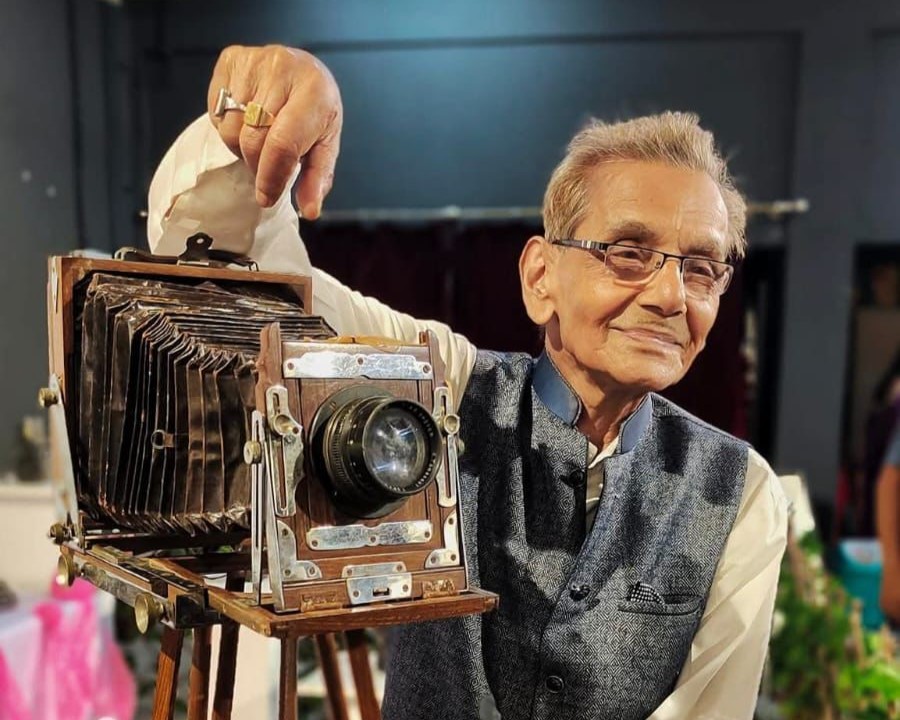
Tezpur, January 6, 2026 (Tuesday): Nalini Kanta Baruah, a renowned photographer and Bishnu Prasad Rabha Award winner, passed away at his residence in Barahalia, Tezpur, on Tuesday evening, 8 January 2026, at the age of 95. He had been undergoing medical treatment for an extended period.

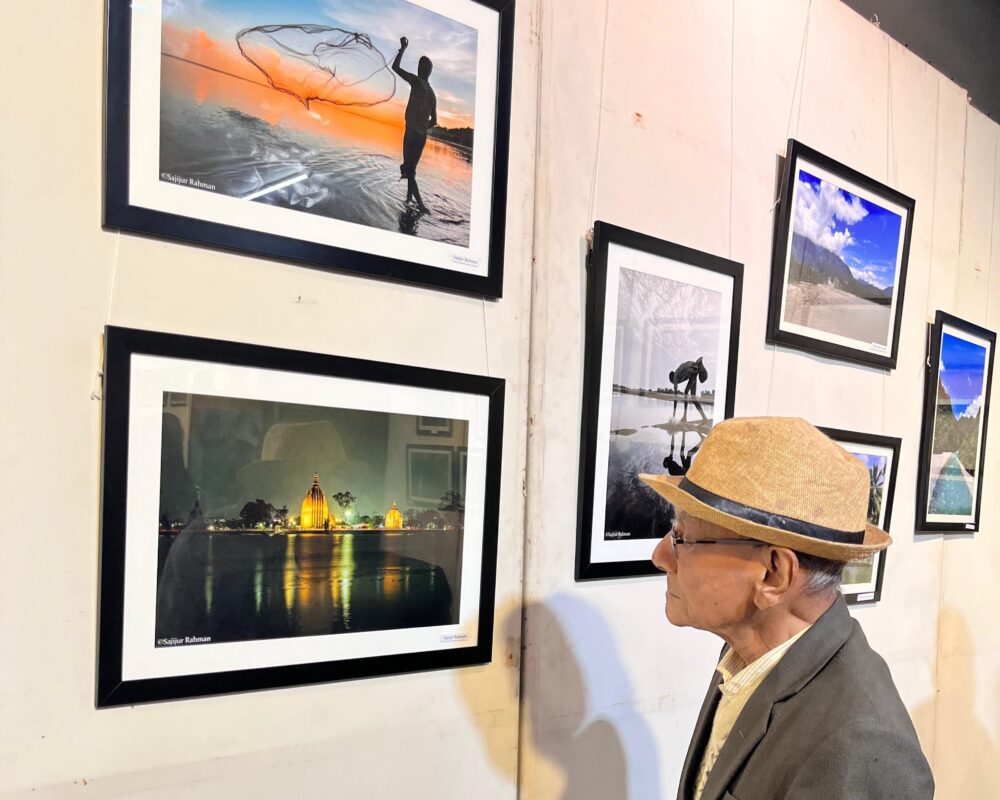
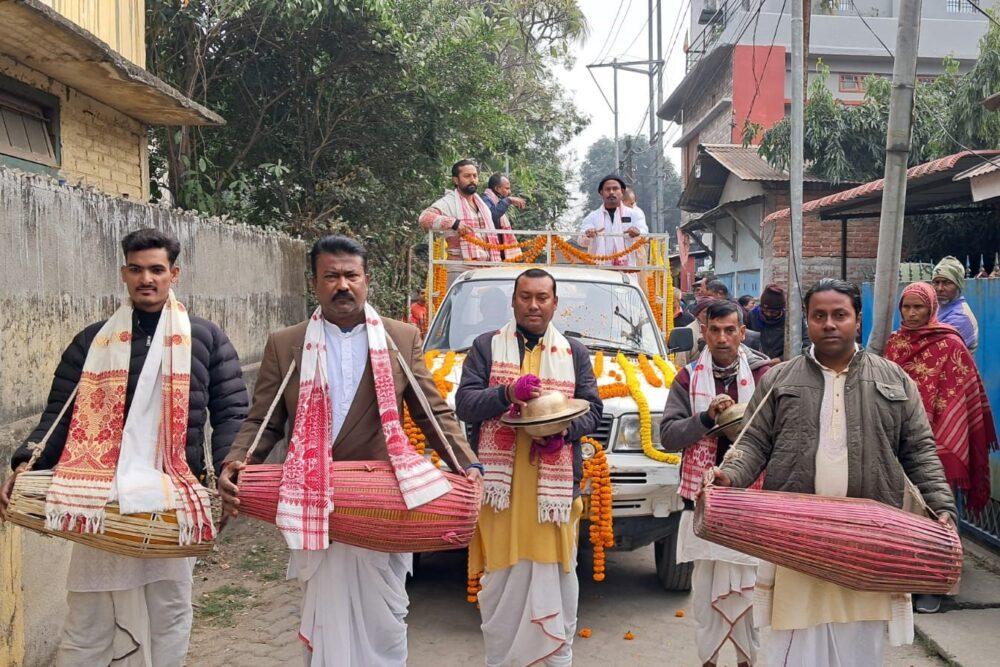
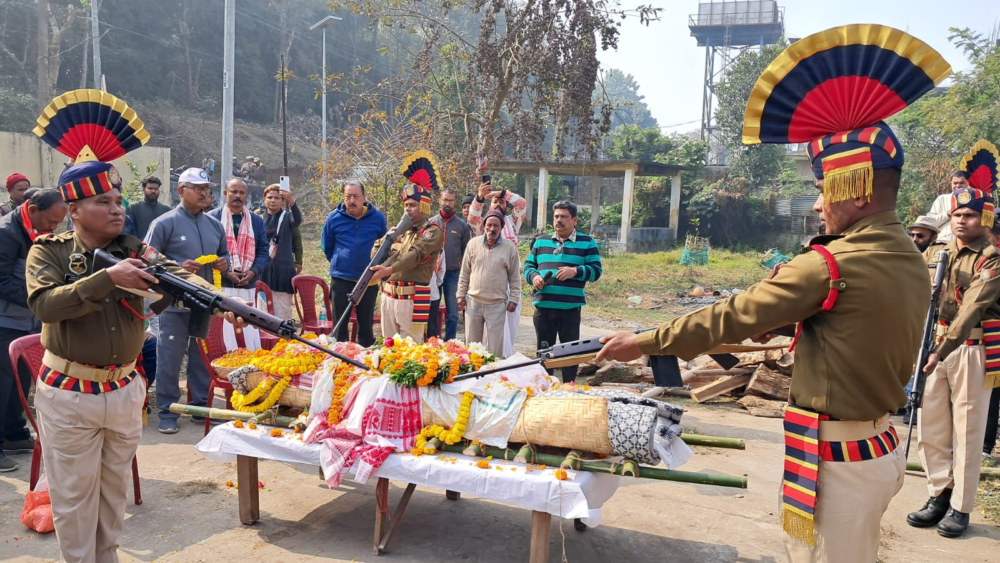
His death at 8:30 pm has cast a shadow of grief across Assam’s cultural, artistic, and media circles, marking the end of an extraordinary creative journey spanning nearly eight decades. His last rites were performed with full state honours at Harjarapar crematorium on Wednesday, attended by admirers, fellow artists, journalists, and district administration representatives. Earlier that day, a public tribute programme was held at Church Field in Tezpur, where hundreds gathered to bid farewell to the master photographer.


Nalini Kanta Baruah was born on 22 April 1931 at the Durrung Tea Estate, situated near Tezpur at that time, Baruah’s journey into photography began with a remarkable story. At the age of seven, Polson’s Butter Company was running a contest offering gifts in exchange for 60 coupons. Young Baruah diligently collected the coupons and gave them to his father, who mailed them to Bombay. About two weeks later, he received a ribbon-tied beautiful package. When his father opened it, they discovered a Kodak 620 Brownie camera inside, his first camera and the starting point of a legendary career. As Baruah himself recalled in a documentary: “At 7, Polson’s Butter was running a contest that if you send them 60 coupons they’ll give you a gift. So I collected 60 coupons and gave them to my father who mailed them to Bombay and after about two weeks I received a ribbon tied beautiful package which my father opened and saw a Kodak 620 Brownie Camera.”
Revered as a “Shutter Guru”, Baruah transformed photography from mere documentation into a powerful artistic language that was bold, introspective, and often provocative. He is widely regarded as one of India’s earliest photographers, and possibly the first from the Northeast, to experiment with nude photography in a public and artistic context. His groundbreaking work in this genre challenged societal taboos and rigid moral frameworks, introducing a subtle yet fearless aesthetic that earned national and international recognition. One of his nude photographs made history by appearing in mainstream newspapers, a radical moment for Indian visual culture. His first nude photograph was published in the weekly newspaper ‘Nilachal’, and over his career spanning eight decades, he captured close to 300,000 photographs.

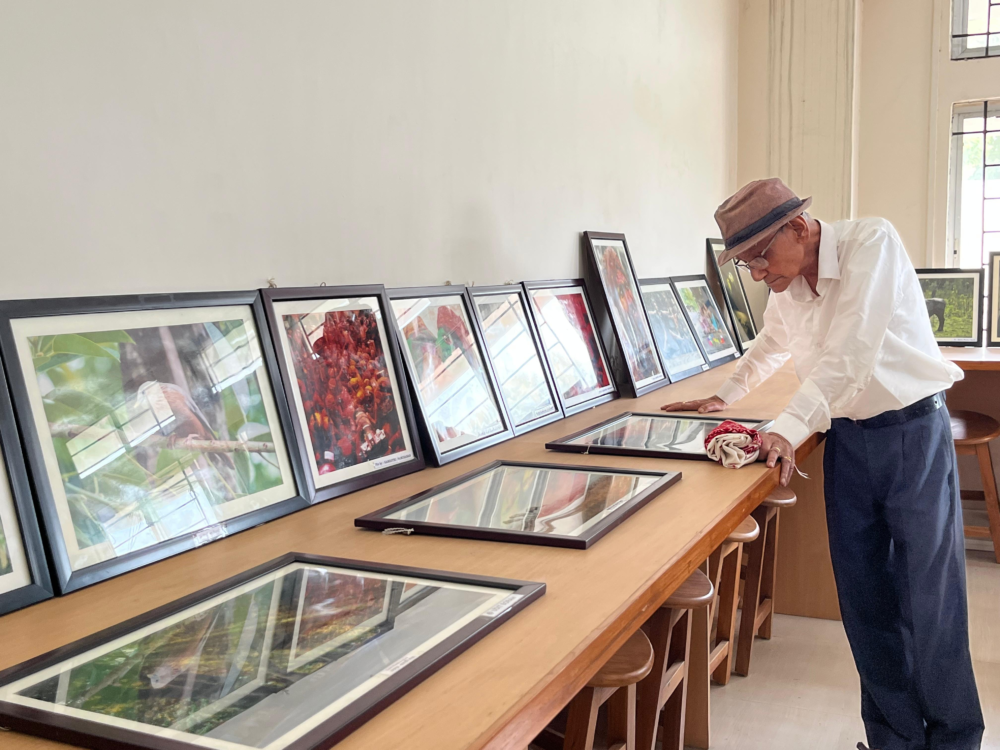
Beyond his pioneering work in nude photography, Baruah’s lens documented significant historical moments, including rare images from the Indo-Chinese war era that captured soldiers and army life with remarkable sensitivity. His portfolio extended to politically charged portraits and social realities reflecting the turbulence and transitions of his times.
Deeply embedded in Assam’s cultural landscape, Baruah maintained close associations with iconic personalities including Bishnu Prasad Rabha, Bhupen Hazarika, and eminent writer Homen Borgohain. These relationships inspired some of his most evocative portraits, capturing not just faces but the spirit of Assam’s intellectual and cultural renaissance.
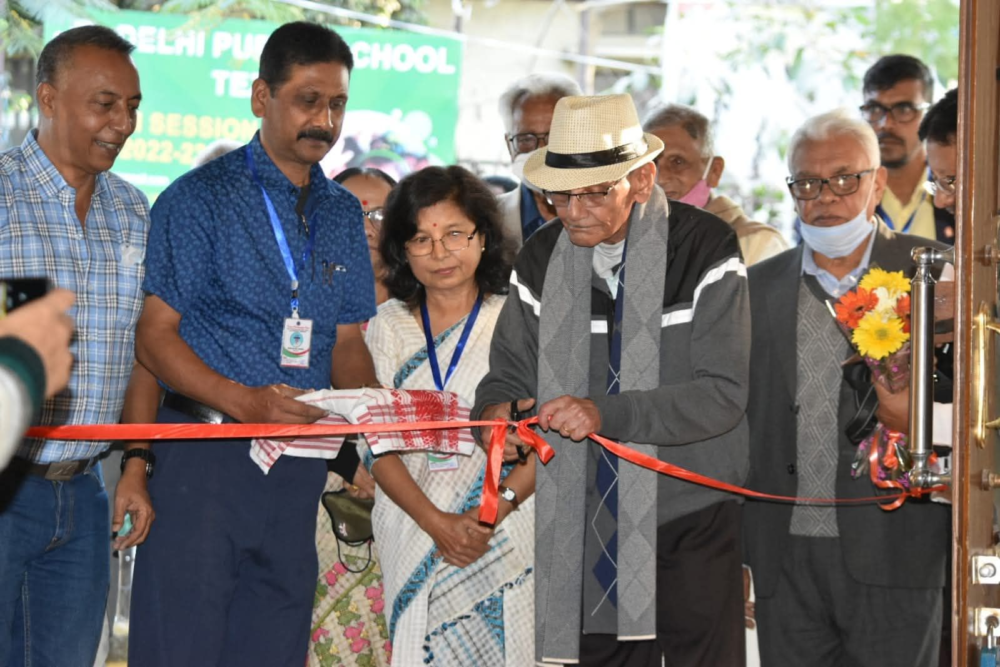
His celebrated works include The Symbol, Majestic, Fly and Fly, No Word, The Companion, Trust, Culture, Naked Touch, Death and Birth, Universal, Spring Culture, Worry, Missing Bihu Dance, Bihu Dance, Happiness an Assamese Girl, Life Together, Struggle, My Life, The Chain, Mother’s Love, Want, Togetherness, and Play Time.
Condolences have poured in from across the state. Assam Chief Minister Himanta Biswa Sarma, the Photographic Society of Assam, Sonitpur Press Club, Sonitpur Journalists’ Union, Tezpur Sahitya Sabha, district units of AASU and ABSU, Bodo Sahitya Sabha, and numerous cultural and social organisations have expressed profound grief at his passing and extended heartfelt condolences to the bereaved family.

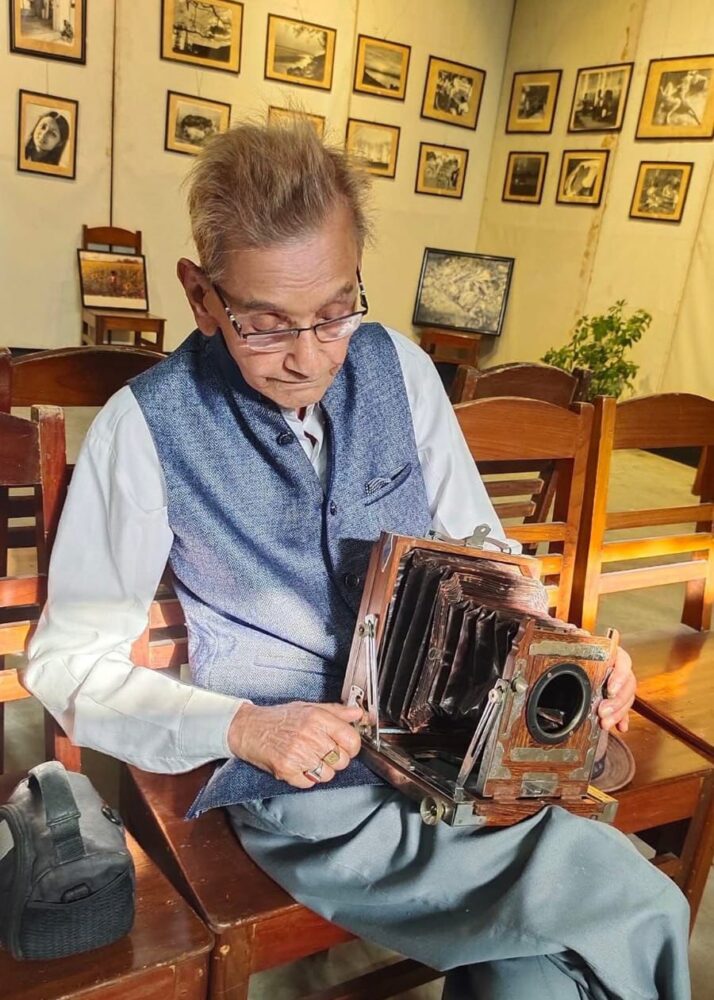
With Baruah’s demise, Assam has lost a distinguished visual artist whose camera transformed light, form, and the human body into lyrical expression. The Photographic Society of Assam noted that his legacy will continue to inspire generations through his timeless work and artistic integrity.
- A Melody Falls Silent: Tezpur Remembers Renowned Flutist Debozit Kalita
-
-
-
-